
The biographical origins of Jonathan Robert Forde — forged between Caribbean sunlight and digital pioneering.
Jonathan Robert Forde, creating in the digital sphere under the artist moniker jonnomango, traces his artistic and scientific lineage to foundational early moments. A week before he was born, his father passed away, leaving behind delicate oil paintings of angels, clouds, flowers, skin tones, and luminous light directly on his baby crib — an intimate first encounter with technical craft and color that inspired his lifelong calling.
A formative scientific milestone followed when Forde won the first SciTech Expo in Barbados by engineering an operational solar cooker with his stepfather — igniting a lifelong fascination with renewable energy, photon capture, and the quantum behavior of light.
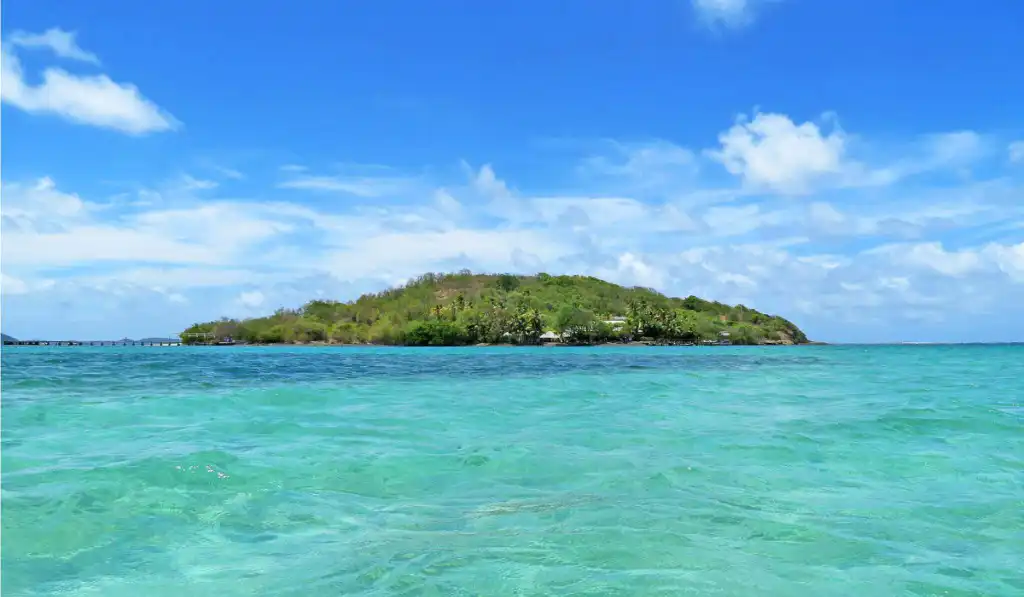
His visual palette was forged during childhood summers in Martinique, sailing offshore lagoons with his uncle to the shallow, crystalline Atlantic sandbar of the famed Baignoire de Joséphine (situated off Le François between Îlet Oscar and Îlet Thierry). Here, under the blazing noon sun, the vivid contrast of translucent turquoise shallows, solar yellow sands, and deep sea ultramarine established his core chromatic calibration.
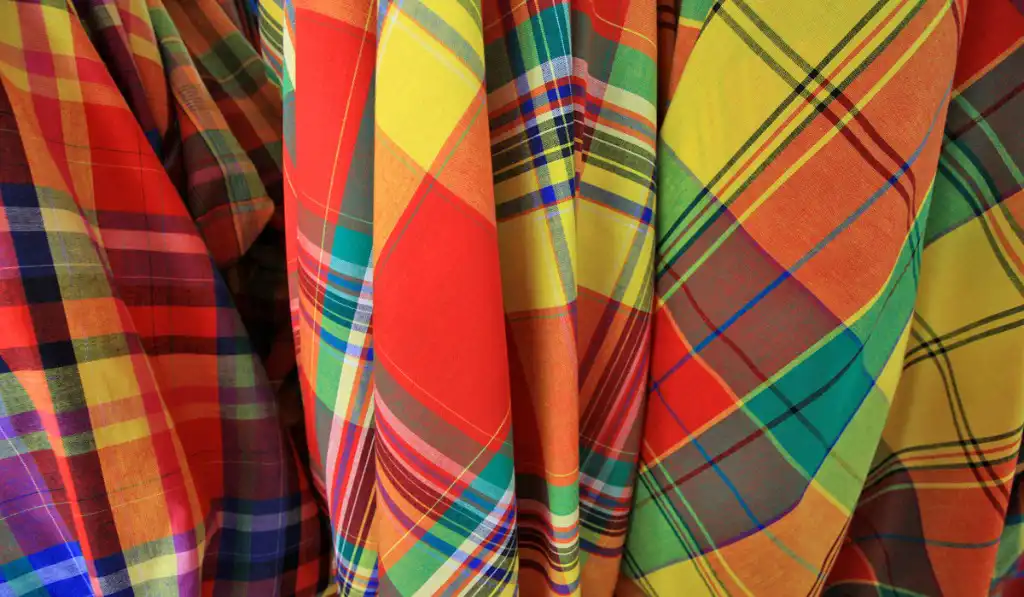
Counterbalanced by the high historical fortification perches of Barbados (such as Gun Hill), Forde navigated the profound cultural duality between authoritarian, structured British-Barbadian discipline and the boundless, expressive warmth of French-Creole Martinique (embodied by vibrant Madras textiles). This tension became the foundational rule of Forde Art: infinite Creole emotional saturation strictly contained within calculated, minimalist geometric architectures.


From mechanical photon capture to the pure mathematical realm of the Additive Plane.
Forde's earliest foundation in light capture began with his grandfather’s vintage 1970s Canon EOS film camera. Handling physical optics, shutter mechanisms, and film emulsion grounded his understanding of how photons interact with physical substrates—and where physical media inevitably fails through grain and degradation.
Introduced to computers at age six on a Windows 3.1 workstation, Forde quickly advanced into early 3D animation platforms, mastering Lightwave 3D and Alias Maya. This unlocked an intuitive mastery over virtual Cartesian space, vector mathematics, and computed ray-tracing lighting engines.
Synthesizing Einsteinian physics (E = mc²), black hole event horizons, and digital compositing operations, Forde established the Additive Plane. Executed at an archival threshold of 8192 × 8192 pixels (8K²), each piece is engineered as a stack of luminous equations designed for 1:1 custom calibrated architectural displays.
To stand before a work by Jonathan Robert Forde is to encounter an optical anomaly: a surface that does not passively reflect ambient room light, but emits living, computed energy. When twilight settles in an architectural space, ordinary paintings fade into shadow. Forde’s backlit creations awaken—casting an ethereal halo that alters the spatial temperature and consciousness of the room.
There is a quiet mystery at the center of this oeuvre. How does a flat, two-dimensional plane evoke the dizzying sensation of standing at the edge of an oceanic abyss or peering through the event horizon of a black hole? The secret lies in the Line of Chromatic Truth—a razor-sharp boundary engineered at 8K² resolution, where neighboring chromatic wavelengths vibrate with such mathematical precision that the human eye perceives an open doorway into imaginary space.
Whether drawn to the monumental power of The Chromatic Portals, the kinetic poetry of 13o in 16n, the timeless brotherhood of Men in Shining Armour, or the cosmic symphonies of The Chromatic Horizons, the collector is not simply buying an image. You are acquiring an instrument of perception—an incorruptible sanctuary of light that will remain as vibrant a century from now as it is at the moment of its first emission.
"Step past the surface. What lies beyond is not an escape from reality, but the sudden, breathtaking encounter with its pure emotional architecture."
— Jonathan Robert Forde